
Unhatched Tortoise Eggs: Candling and Identifying Bad Eggs
Unhatched Tortoise Eggs: Candling and Identifying Bad Eggs
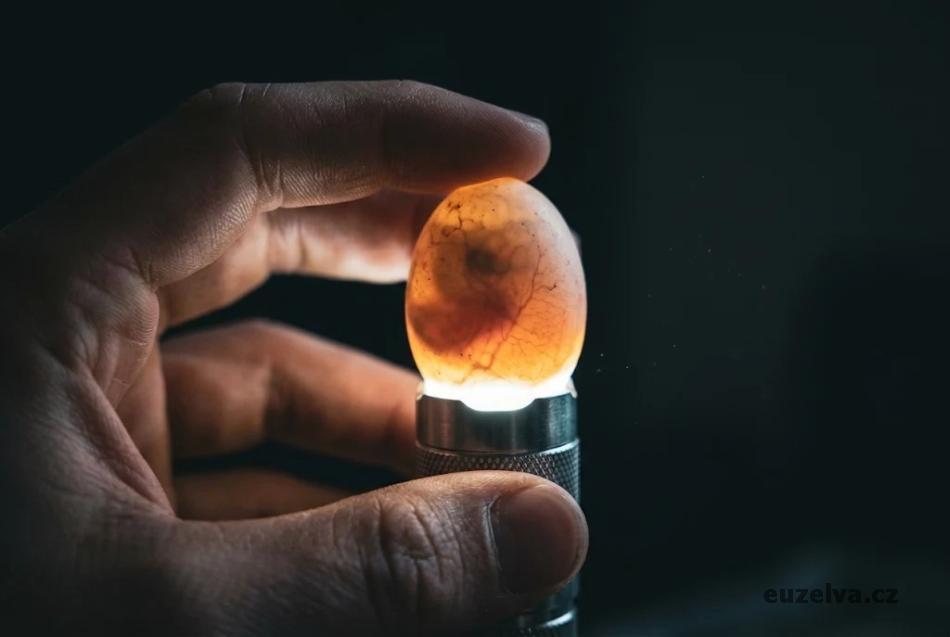
Every year, all of us tortoise breeders (regardless of whether we are beginners or experienced) face the problem of unhatched or spoiled eggs. This means that nothing hatches from the egg – either the embryo dies during development, or something simply goes wrong during the complex process and the egg perishes. In this category, I do not count unfertilized eggs, which remain completely pink throughout the incubation period and never initiate an embryonic development phase.
These failures spare no one, regardless of the size of the breeding group. Naturally, the more eggs you incubate, the higher the absolute number of spoiled eggs will be. Based on my experience, normal "egg mortality" ranges between 3–7%. The number of kept adult tortoises generally does not influence this, except for groups with too few active males, resulting in unfertile clutches due to underestimated male numbers, infertility, or low activity.
When observing a breeding group, you will notice that some males prefer only specific favorite females while ignoring others. Some males are completely dominant, while others are entirely passive. Therefore, group composition has a significant impact on the percentage of successfully hatched baby tortoises.
Another crucial factor is, of course, the incubator and its temperature and humidity settings. Although all breeders know the ideal incubation values, some still experience a 20–40% hatching failure rate (or even 100% among small-scale hobbyists). In such cases, the culprit is usually critically poor incubation or a completely unfertile clutch.
Visual Inspection – What Does a Spoiled Egg Look Like?
Cracked, stained, blackened, or otherwise abnormally looking eggs usually mean the end of any hatching hopes. My own results fluctuate, and the number of spoiled eggs reaches dozens per season. However, relative to the total volume, I stay within the mentioned 3–6%, which is completely normal and standard for European land tortoises (Testudo hermanni, Testudo marginata, Testudo graeca).
This year, I set aside a few spoiled eggs to examine them under a lamp and inspect their contents. Unnatural coloration and distinct dark spots are apparent at first glance.
A group of spoiled eggs:

Details of eggs with distinct stains and spots:


Over the years, I have examined many such eggs, and they usually contain unappealing, foul-smelling contents (classic rotten eggs). In other instances, you find a dead, half-developed baby tortoise or a hard, dried-up yolk.
Detecting Egg Content Using Light (Candling)
I photographed 11 defective eggs by candling them against a strong light source. You can see for yourself how much their contents, internal structure, and coloration vary. The candling method is identical for all, but what the light reveals speaks for itself.


Detecting Contents by Breaking Open Spoiled Eggs
I cracked open three of these spoiled eggs to look directly at their contents, purposely selecting three different types to show expected variations. Needless to say, they emitted a terrible odor inside.
- First case: An egg with a hard, dried-up yolk. When shaken, the internal yolk literally rattles inside (like a baby rattle).
- Second case: An egg containing a dead, partially developed tortoise embryo.
- Third case: An egg completely transformed into a thick, pulpy, rotting mass.


Conclusion
Through these examples, I have shown you how to easily identify a spoiled egg visually and using a strong light source (candling). Important note: all these discarded eggs were left in the incubator for at least 14 days or more beyond the standard hatching period for the given species! Only after it was 100% certain that no live tortoise would ever emerge were they removed and thoroughly inspected.
I wish you all as few such spoiled eggs in your incubators as possible!
Copyright ©


