Tortoises and Temperatures: Thermoregulation Guide
Tortoises and Temperatures

Introduction:
I am wondering how to approach this because temperatures and everything surrounding this topic are by no means a simple matter. However, the most important thing is to understand the core meaning of this topic and, above all, to explain it clearly. Although the phrase is misleading, a LAND TORTOISE as a cold-blooded reptile HAS NO INTERNAL THERMOREGULATION!! Instead, it regulates its body temperature through its behavior. This is basic elementary school curriculum, yet I increasingly encounter misleading information on this topic. Claims such as "baby tortoises have poor thermoregulation until a certain age" and similar nonsense are something I read every day. All of this indicates that the authors lack basic information about tortoises and needlessly complicate life for beginner keepers. How are they supposed to choose the right path? Therefore, I will try to describe the fundamental facts about temperatures and tortoises. A tortoise moves through an environment with varying temperatures, including basking in the sun, and thus maintains its optimal body temperature! It is very simple, and to satisfy these needs, only one thing is required: simply allow the tortoise to do so.
The first thing we must picture to get some clarity is the weather in the specific region where tortoises live. For Europe, the synonym is Greece. Most of you also own a tortoise that originates from this region or whose species’ natural occurrence is mapped there. This primarily applies to common species such as Testudo hermanni, Testudo marginata, and of course Testudo graeca.
The second equally important piece of information is that baby tortoises in the wild receive absolutely no special exceptions and are self-sufficient from the moment they hatch. Just like adult tortoises, they must endure all the hardships of life, including natural conditions and temperatures. This is vital information that needs to be realized. They are equipped with instincts just like other animals, which unfailingly guide their behavior and protect them from death.
The third thing is that a tortoise simply does not go where it feels uncomfortable. That is why it is so crucial to provide it with a variety of temperature zones and shelters, both in terrariums and other enclosures. It is then up to the tortoise to utilize everything according to its needs for its own well-being.
Weather in Greece – An Idea of What Tortoises Must Endure:
Greece is typical for its Mediterranean climate. Summer temperatures hover around 30°C (86°F), with mostly clear to sunny skies. The advantage is that even when rainy weather with showers occasionally appears, it lasts for a maximum of one day.
The warmest weather occurs on the island of Crete or the Cyclades. Here, daytime summer thermometer readings reach an unbelievable 40°C (104°F). This type of weather is influenced by the African continent.
High summer daytime temperatures and minimal rainfall are typical for this period in Greece. Every day the sky is clear and pure without a single cloud. The number of sunshine hours is extraordinarily high. In July, the sun shines continuously for a full 12 hours/day; in June and August, this value decreases slightly to 11.25 hours. The number of sunny hours in June and September is also acceptable, hovering around 9 hours/day.
And I am not even mentioning temperatures in Africa, India... where tortoises endure far higher temperatures completely without problems.
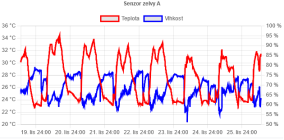
For Interest – Current Temperatures in the Habitat of Geochelone elegans – Bahawalpur, Pakistan

Therefore, it is important to know that no tortoise escapes this weather and must manage by finding a suitable shelter with an acceptable temperature gradient that protects it from extreme heat; otherwise, it faces being baked alive inside its own shell. Even that happens in nature, and those tortoises simply have bad luck. In cases where the air temperature reaches 50°C (122°F), the temperature exposed directly to the sun is unbelievably high, yet all animals manage to adapt and survive. Some tortoise species survive the hottest period of the year through summer estivation (summer sleep). Simply because suitable living conditions are absent, they protect themselves this way.
Life in an Outdoor Pen:
Out there it is very simple; you just need to build various shelters for the tortoises, and if you have enough space, it is advisable to plant bushes, small trees, etc., in the pen, which also provide the tortoises with necessary shade for temperature regulation. Around midday, even in our climate, temperatures in the sun reach around 50 - 60°C (122 - 140°F), and tortoises utilize the sun according to their needs mainly during morning hours when they warm up to a certain temperature, which they then freely regulate throughout the day. Therefore, when adverse weather brings temperatures around 15°C (59°F) and overcast skies, tortoise activity is very low as they wait for better conditions, especially regarding warmth. This also raises the question of why tortoises hibernate, and the answer is simple.
They survive unsuitable climatic conditions for their species. Therefore, if a winter is warm, tortoises in their homeland simply will not hibernate. In their native lands where temperatures are much higher, tortoises emerge during hot days only early in the morning and then late in the afternoon. They wait out the highest temperatures hidden inside shelters where the sun cannot reach them. Some species survive the peak summer heatwaves through summer sleep (estivation). Just like in winter, they are forced into this by weather when conditions are unsuitable.
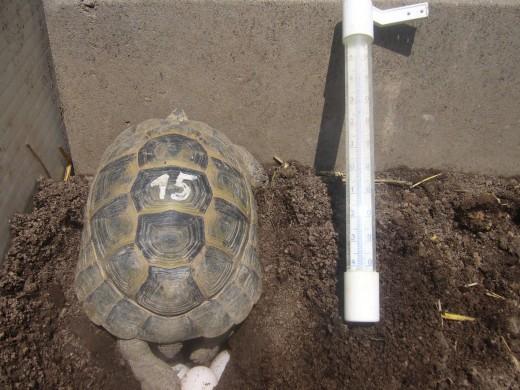
May 28, 2010 – 11:45 AM, sunny, shadow temperature 20°C (68°F), a T. graeca egg-laying at a sun temperature of "only" 42.5°C (108.5°F)! The tortoise calmly digs a nest hole in the most suitable spot near a wall and lays 4 eggs within an hour.


Terrariums and Tortoise Tables:
Temperatures in this environment must be adapted to two factors. We must also realize that the smaller our spaces are, the harder it is to regulate the internal temperature environment. We can help ourselves, especially in terrariums, by cracking open doors if ventilation openings are insufficient to dissipate heat and the breeding spaces overheat. It is therefore necessary to create an environment with diverse temperature zones for tortoises so they can reliably regulate their body temperature. We arrive at the core of the matter: the temperature directly under the heat source (lamp, UV lamp...), where in my opinion a clearly higher temperature ranging between 35 - 40°C (95 - 104°F) is needed for summer temperatures and the simulation of this period.
Just like in the sun. Temperatures recommended elsewhere around 30 - 35°C (86 - 95°F) for summer simulations are severely underestimated and result only in tortoises sitting under the heat source for prolonged periods primarily due to slow and insufficient warming. Yes, those lower temperatures are only correct if we are simulating the spring, autumn, or transitional part of the year. Every land tortoise, including hatchlings regardless of age, possesses self-regulation mechanisms and doses its own time needed to reach optimal temperature just like in nature. The claim sent to me by a reader—stating that high basking temperatures in hatchlings cause shell softening known as "overheated tortoise syndrome"—is complete nonsense regardless of the temperature value in °C. It is utterly misleading information that has never been confirmed in my own breeding practice.
Fine, to put it simply, to each their own, but "overheated tortoise syndrome" is an absolute fabrication. It is an unsupported claim akin to me writing about "under-heated tortoise syndrome." It may sound scientific, but if you have ever visited Prague Zoo upstairs where they keep Geochelone pardalis, hatchlings of this species have an Osram UV 300W lamp there and can voluntarily approach as close as 15 - 20 cm to it, yet none of them suffer from this syndrome! I will not try to talk you out of it, but a tortoise that can choose its temperature gradient is a happy tortoise, and just as you would not willingly bake yourself in the sun, neither will a tortoise act against its own survival.
I remind you that I have bred up to 13 species of land tortoises and have never observed or experienced this syndrome, even though almost all tortoises experience maximum basking temperatures during summer simulations. Of course, if someone roasts tortoises year-round like little sausages at maximum output without changes or options to escape, they will run into problems with a sick tortoise—not because of some syndrome, but because its behavior becomes unpredictable, risking these and other complications. Hatchlings warm up faster due to their size and subsequently retreat into shade or another environment, which is completely natural behavior. A permanently overheated terrarium without providing the tortoise any cooling option is entirely different; that causes continuous overheating, risking death or health damage!
Geochelone radiata with an all-day running lamp utilized as needed – 17 cm, approx. 65°C (149°F)

Hatchlings hatch in the wild during more favorable periods when temperatures generally do not reach complete maximums, making their start in life slightly easier. However, that does not apply to temperatures in the sun, where it is simply scorching hot anyway. On the other hand, if they prefer shade, they have it and there is nothing to solve. This dismantles the hypothesis regarding basking spot temperatures, and I repeat: when a tortoise dislikes the heat, it simply does not crawl there and stays at a distance that suits it or in areas acceptable to it.
Under this 70W UV lamp, the temperature measured on the substrate reaches up to 50°C (122°F), and 1 hour after switching on, tortoises compete for the best position for rapid warming, with some dozing off under the lamp. Photo taken in the morning at 9:00 AM.

The exact same enclosure at 1:00 PM after feeding, showing that tortoises have formed a circle around the hottest point and are utilizing a lower temperature gradient than in the morning. By evening they will no longer be here and can be found in the cooler part of the enclosure

The exact same enclosure at 3:15 PM as lines of basking tortoises thin out

This case clearly demonstrates how they self-correct their needed temperature gradient for the given moment. While morning basking was most intensive because they needed to rapidly reach operational temperature, by noon they transition to a maintenance phase, merely keeping an appropriate temperature. None of these tortoises can be described as overheated, because like any reptile, they choose the most ideal temperature themselves within the given space! Nighttime temperature drops are appropriate and under no circumstances should we provide light or heating at night!! The drop for European species should be as large as possible, and for others according to the breeding plan for the given species.
Simulating Seasons for Tortoises:
Above all, we must not forget that in purely indoor terrarium keeping, we cannot maintain recommended (summer) temperatures all year round. Roughly every 3 months, we should alter the temperature rhythm for the tortoise if possible, attempting to match—at least remotely—the season we want to simulate, including changes in lighting duration. If this is not observed, land tortoises will be chronically overheated or under-heated, which can lead to health problems or even death!!
When simulating a non-summer season, we gradually lower temperatures by up to 5 - 7°C (9 - 13°F), including right under the light source. Reduced temperatures, for example:
- under the light source: 28 - 33°C (82 - 91°F)
- in the cool zone: 22 - 24°C (72 - 75°F)
- lighting duration: leave daily duration as is, but reduce under-source lighting to 7 - 9 hours
If you fail to lower the temperature in the cool zone of your apartment unit... at least reduce the temperature under the heat source!
Remember that this topic must be approached with sensitivity, taking the tortoise’s behavior into account, and no one can give you a guaranteed manual because every individual land tortoise has entirely unique requirements as an individual and a species.
Important !!!:
Because baby tortoises are mostly sold year-round, do not forget to ask the breeder or seller what seasonal period you should simulate after purchase. This prevents complications with improperly configured environments, especially regarding temperature! Problems adapting to your new environment become much easier, and the tortoise is not completely disoriented by a sudden change.

Model Example of How It Could Be Set Up Throughout the Year (always consider the current physical state of the land tortoise)!!!
For European Species (Non-Hibernating):
December - end of February = summer simulation (temperature under lamp 40°C / 104°F, in cool zone 25°C / 77°F)
From March = temperature drop toward spring stagnation
Mid-March - mid-April = spring stagnation (temperature under lamp 30°C / 86°F, in cool zone 22°C / 72°F)
Mid-April - May = further temperature drop
May - October = outdoors
October - end of November = autumn
December = gradual temperature increase toward summer simulation
For African Tortoises:
November - mid-April = summer
Mid-April - end of May = dropping temperatures and preparing for outdoor transfer
Early June - mid-June = further dropping temperatures, moving them outdoors
Mid-June - mid-September = resting outdoors
Mid-September - end of October = raising temperatures toward summer
November = summer

Body Temperature Regulation in Nature or Outdoor Pens:
The exact same principle works in nature, see the following photographs. Tortoises optimally maintain their body temperature according to weather, temperature, and light conditions. Mornings begin with intensive basking, followed by feeding, and around noon they start seeking shade. Activity returns in the late afternoon when temperatures begin dropping again.

Perfect temperature regulation of adult tortoises in the wild. At 1:30 PM, all tortoises sit on the boundary of light and shade, regulating their optimal body temperature!
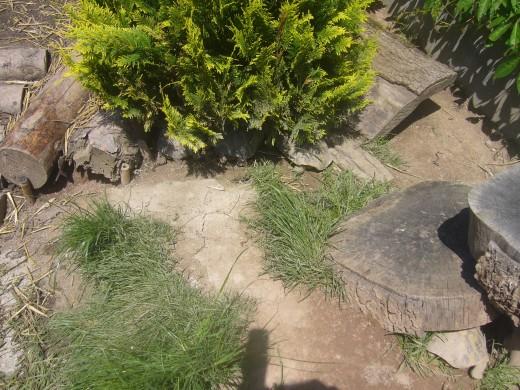
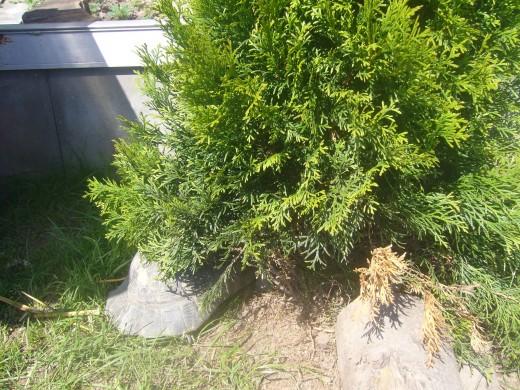
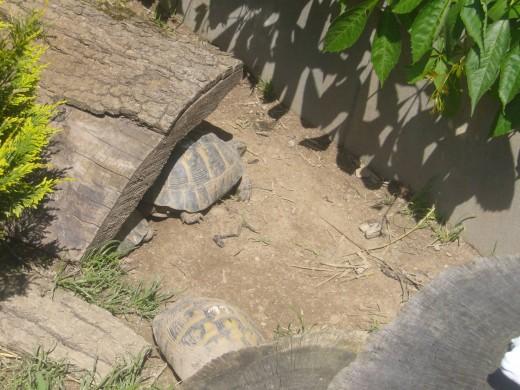

In late afternoon hours, they expose their carapaces to the sun once more, catching the final rays before sunset.

Basic Rules of Terrarium Keeping in Points:
1) The temperature under the source must not be too low, which we recognize by a tortoise staying for long periods in the hottest spot directly beneath the heat source. As a minimum, I consider 40 - 45°C (104 - 113°F) measured on the substrate regardless of tortoise size for commonly kept species during summer simulation.
2) When simulating spring or autumn transitional periods, we choose lower temperatures across the board by about 5 - 10°C (9 - 18°F) (30 - 35°C / 86 - 95°F), even under the light source! Change this roughly every 3 months (according to tortoise behavior).
3) Diverse temperature gradients within breeding spaces so that the tortoise has the option to cool down and thereby regulate its optimal temperature, applicable to any simulated season.
4) Necessary nighttime temperature drops without any lighting or heating, once again applicable across all seasons.
5) Avoid using under-tank/bottom heating in breeding spaces whenever possible.
Important for Beginners and Tortoise Keepers!
It always depends on the size of the breeding space. In large terrariums or tortoise tables, setting up diverse temperature environments is much easier; conversely, in smaller breeding spaces, simulating varied temperatures is harder and requires a certain compromise. In those spaces, we stick closer to moderate temperatures to prevent the entire enclosure from overheating unnecessarily!
A second issue may arise with certain keepers who essentially do not understand tortoise keeping well because they are just starting out and struggle with setting up temperature shifts throughout the breeding year. You must always proceed according to the behavior of your specific tortoises in your specific environment! What does that mean for a layman? Just one thing: If your tortoises are content, eating, active, and clearly show no signs of deficiency, change nothing; changes should only occur when their behavior changes! Making missteps can cause more harm than good!
Conclusion:
Just like with everything else, we need only use common sense and look at how tortoises live in their native habitats. Anyone who doubts this can use an ordinary thermometer and measure temperatures in the sun, where during summer months even here shadow temperatures reach around 30°C (86°F) while sun temperatures are drastically higher. I am taking a thermometer on my holiday this year and will record all sun temperatures for you—and I am not going to Africa, just Croatia :-)) It must also be pointed out that indoor tortoises must also have varying seasonal temperatures simulated according to conditions, and they cannot be kept under identical conditions constantly. Part of this is naturally handled by the outdoor seasons, where indoor apartment temperatures fluctuate depending on the season and weather even with identical lighting setups, partially altering the internal terrarium temperature range. Furthermore, the kept tortoise species matters, as African tortoises require different approaches and temperature conditions than European ones.
I will briefly mention alleged shell softening. Diarrhea and other symptoms leading to shell softening are mostly caused by unsuitable breeding conditions as a whole, including diet. Furthermore, congenital defects and the failure of vital organs also lead to carapace softening in tortoises. Overdosing with artificially supplied vitamin D (AD3) is another factor that invariably produces this effect, leaving the tortoise beyond help. The opposite is a long-term deficiency of vitamin D in the form of natural sunlight or UV lamps. All these practices reliably lead to poor overall tortoise health, and subsequent external manifestations are more or less fatal consequences.
The only thing that definitely does not contribute to this is the sun, a heat source replacing it, and an appropriately chosen temperature in the space underneath it!
All of this is conditioned upon proper husbandry conditions, as always.
You can find more useful information on these pages:
Measuring Tortoise Temperatures
Measuring Temperatures in Croatia
Copyright © euzelva.cz