Outdoor Shelters and Houses for Land Tortoises
Outdoor Shelters and Houses for Land Tortoises

Introduction:
As inquiries multiply regarding how an ideal shelter, house, or enclosure in an outdoor pen should look, I have decided to provide a guide and tips on how to handle this seemingly simple challenge. Land tortoises are hardy creatures and do not strictly "need" a house to survive, but in our significantly harsher climatic conditions compared to their native habitats, they partially require one (depending on your breeding style).
You can easily build a shelter yourself or have professionals manufacture one, though custom production can become quite expensive. Let’s outline various options, suitable materials, and the actual needs of tortoises.
I will divide shelters into several categories primarily based on their intended purpose. There is a huge difference between whether a tortoise is being prepared for winter hibernation inside the shelter or if it will serve merely as a shade during hot days. These guidelines focus exclusively on outdoor pens and balconies... While balconies represent a slightly different category with distinct parameters, anyone can manage them by following basic rules. For photographic illustrations, I use not only my own shelters but also enclosures belonging to other breeders.
I will deliberately omit masonry brick structures, which can also be used without problems. These are permanent buildings, usually connected to a family house or outbuilding, and when space and other requirements are met, they can serve excellently year-round. We encounter them mainly in zoos or at breeders in rural areas where there is no shortage of outdoor spaces or unused farm buildings (thanks largely to our ancestors and their lifestyle).
As indoor bedding/litter, hay or straw is the best choice. This material serves both an insulating and a purely practical purpose, because tortoises simply do not choose where they relieve themselves—it is all the same to them.
Masonry Enclosures with Openable Roofs

What Shape of Shelter and Roof Covering to Use:
All breeding spaces must have trouble-free access, which is why having an entirely removable or openable roof is best. This is the only way to ensure effortless cleaning and smooth visual checks of our pets. Much depends on the overall size of the enclosure and the shape of the roof. For smaller spaces, you can choose a gable (pitched) roof, but a single-slope (shed) roof is usually more practical because manipulation is easier, it takes up the least space, and for larger areas, the roof section can be split into parts.
Most standard construction materials can be used for roofing. The single main criterion is weight, so we choose options ranging from roofing felt and special polycarbonate sheets to various U- or S-shaped plastic profiles commonly available in specialized stores. Avoid plastic sheeting (tarps), which have a short lifespan, poorly withstand wind, and can only be used for a very limited time.
If water leaks into the shelter anywhere, wood swelling is inevitable, and its expansion will later cause headaches, for instance, when opening the top cover. Therefore, always leave sufficient clearance gaps everywhere and forget about machine-like precision. Winter frosts and ground shifts—where larger structures tend to twist—will also take their toll. For this reason, classic concrete foundations or at least supporting the shelter around its edges (using timber beams or concrete blocks) are ideal. This will drastically extend the lifespan of the entire structure.
Single-slope (shed) roof

Gable (pitched) roof profile

Opening the entire top section is relatively complex and strenuous

Size of the Shelter:
Size is another dilemma. Whenever possible, build the shelter right from the start to accommodate the adult size of the respective tortoise species, and never skimp on space. In my opinion, the minimum suitable interior size for a 20 cm tortoise is at least 80 x 60 cm. For the simple reason that smaller spaces overheat easily, and the tortoise must have room to move around even inside. You also need to account for a certain amount of hay or straw, which serves wonderfully as bedding.
Floor / Bottom – Yes or No?
Here we encounter another hurdle. If the shelter is going to be used year-round, having a floor is advisable, primarily for insulation reasons (preventing heat loss). It is a compromise between the needs of the tortoises and the technical necessity to insulate against cold. For a year-round type, we choose an insulated floor just like the walls, and maintain necessary humidity by placing a plastic container filled with a damp substrate in a portion of the interior. For a half-year shelter, 50% wooden flooring and 50% bare earth (ground surface) is ideal. For a summer-only type, we leave the shelter bottomless, resting directly on the soil.
Where to Place the Shelter?
Placement depends largely on its construction. If we have a well-insulated shelter, we can place it in the sun with the entrance facing south so that morning sun lures the tortoises out. A summer shelter—which is completely uninsulated—is a different story; we prefer to place it somewhere in the shade (for example, under a tree or bush). If we do not have that option, we try to find a spot with minimal daily sunlight exposure to ensure it does not overheat inside on very hot days. If no natural shade is available in the pen, we must ensure maximum ventilation during summer heatwaves or consider a natural hiding spot.
Entrance to the Shelter:
Choose an entrance large enough for an adult tortoise of the given species, with a safety margin of at least 5–10 cm on each side. For smaller shelters, place the entrance completely to the right or left—primarily so the tortoise can crawl into the distant corner, which is warmer on cooler days. It is beneficial to hang an old carpet strip or heavy fabric over the entrance on the inside; the tortoise crawls freely in and out, and the flap falls back into place behind it, preventing excessive drafts. For a shelter housing multiple tortoises, place the entrance in the middle so they can access it from all sides; otherwise, queues will form, and a single tortoise can successfully block the entire exit.

Ventilation:
Do not forget to include adjustable ventilation during construction to prevent total overheating inside during scorching summers (which can cause tortoise mortality!). For a year-round shelter, this is less critical because it behaves like a massive thermos flask that keeps cool in summer and warm in winter. For other types, this needs to be solved more thoroughly—placing it in the shade or installing closable ventilation vents helps.
Basic Classification of Shelters by Purpose:
1) Permanent Year-Round Shelter: Undeniably the most complex and expensive construction intended for continuous, year-round operation. It serves for preparing tortoises for hibernation, post-hibernation recovery, and in some cases, actual overwintering. Temperature resistance must be high (-30 °C / -22 °F).
2) Half-Year Shelter: Designed mainly for non-hibernated tortoises moving from indoor terrariums into outdoor pens. Used roughly from early May to late September depending on temperatures. Medium temperature resistance (-5 °C / 23 °F).
3) Summer Shelter: Used only during the 3–4 warmest months. Temperature resistance requirements are practically non-existent; it serves tortoises exclusively as shelter from bad weather or harsh sun.
4) Balcony Shelter: Mostly serves as a summer hideout on a balcony. If used for longer periods (early spring / late autumn), a frost-resistant type of shelter must be temporarily employed.
1) Year-Round Shelter
Technically the most complex construction. We approach building it with a strong emphasis on thermal resistance, factoring in electric heating equipment for winter operation beforehand. Materials can vary, but wood, plywood, or glued laminated timber boards that better withstand outdoor elements work best.
For insulation, use polystyrene boards at least 5 cm thick, and line the interior walls with ordinary tongue-and-groove paneling so that dirt does not penetrate into the cavities containing insulation. Interior coatings must be non-toxic (certified for direct food contact). A simple door is insufficient for closing the entrance; it must be insulated as well.

Electric Heating of the Enclosure:
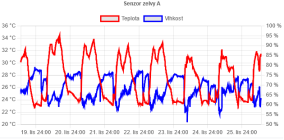
Anti-frost measures during severe frosts are a separate chapter. You can use heating cables, heating plates, or other electrical devices. A dual safety fuse and temperature regulation capability are absolute requirements. Infrared heat lamps cannot be used because they cause local overheating, wake tortoises from their sleep, and in extreme cases, ignite the bedding. Temperature regulation of both the device and the space is a must. For a 120 x 60 x 50 cm shelter, this costs roughly around 10,000 CZK (the digital dual-stage controller with safety features being the most expensive part). Never use light sources for heating shelters, as tortoises require a dark, light-free environment for rest.
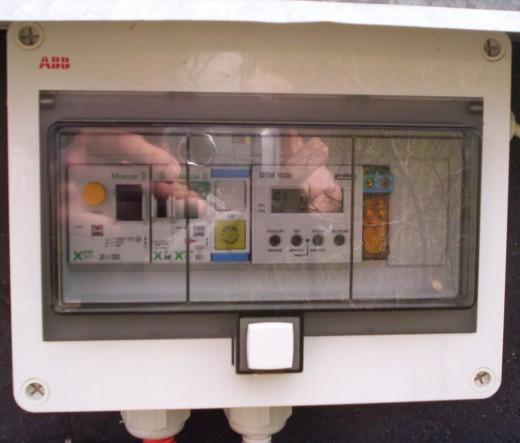
Read more about heating enclosures in a dedicated article: HEATING TORTOISE ENCLOSURES
2) Half-Year Shelter
The assumption here is that the tortoise spends time here from spring to autumn without severe frosts (brief morning frosts down to -5 °C / 23 °F max). Up to 1 cm of polystyrene insulation or thicker wooden planks are entirely sufficient. It requires no internal heating, just a fully sealable entrance. A floor area split 50% bare earth and 50% wood suffices. We close tortoises inside at night if frost is threatening.


3) Summer Shelter
Used during the 3–4 warmest months. You can use old wooden crates, grandfather’s chest from the attic, etc. You only need to ensure the roof covering is waterproof and cut out an entrance. Appearance does not matter. A large flat stone placed on two bricks (adjusting height to suit the tortoise) also serves as an ideal and purely natural hideout.


Find detailed information on balcony tortoise keeping in our dedicated article: BALCONY ENCLOSURES FOR TORTOISES
4) Balcony Shelter
This concerns apartment dwellers and residents of older buildings without a garden. The primary prerequisite is the presence of direct sunlight for at least 4 hours a day. Tortoises need sunlight like salt, and no UV lamp can replace it 100%. For summer, we choose a highly ventilated shelter; for spring and autumn, a shelter that protects against light frosts.
Principles of Balcony Keeping:
- Well-ventilated spaces where the enclosure will be located
- Sufficient shaded spot available throughout the day
- Better to avoid classic small houses (opt for stones raised on legs instead)
- Adequate water supply and a secured damp area with substrate or soil
- Feeding area located in the shaded part


A large flat stone raised on legs uniquely suits a balcony enclosure as a shelter. It fulfills all demands: great ventilation, slowly rising temperatures underneath, and it does not heat up as quickly as wood.

Conclusion:
When building, just think it through and keep the specific needs of different tortoise species in mind. A European tortoise has completely different requirements than one from Central Africa. Classic greenhouses or underground hides can also serve as shelters. If you are building a luxury house with technological gadgets, never skimp on high-quality exterior materials, or your piece will fall apart after the first few years. Also, do not skimp on space—you never know if your breeding stock might expand in the future.
Related Article: Tortoise Breeding Equipment
Copyright © euzelva.cz